Job opening: Biochemist / Chemical Biologist
Laboratory of Poly(ADP-ribose) in RNA Biology
Our research program focuses on how gene regulation impacts diseases states, including cancer, neurodegeneration and virus infection. We focus on how RNA biology is regulated by poly(ADP-ribose), or PAR—a druggable protein modification. PAR polymerase (PARP) inhibitors are currently approved by the FDA to treat multiple cancers. Though therapeutically important, PAR is understudied partly due to a woeful lack of tools.
We invent tools to investigate this protein modification, and have discovered its roles in various RNA processes, RNA virus infection, and the formation of RNA granules and other biomolecular condensates. To dissect the underlying mechanisms mediated by PAR, we also use a range of multi-disciplinary techniques from chemical probe synthesis, single-molecule biophysical measurements and quantitative imaging to informatics, genomics and proteomics approaches.
Our team is highly collaborative, drawing expertise from within the lab, the university and around the world. We aim to translate our scientific findings to medicine.
News Highlights
May 23: Anthony is promoted to Professor with Tenure at Hopkins!
May 4: Anthony was invited to speak on the Chemistry at the Frontline of Coronavirus for the American Chemical Society.
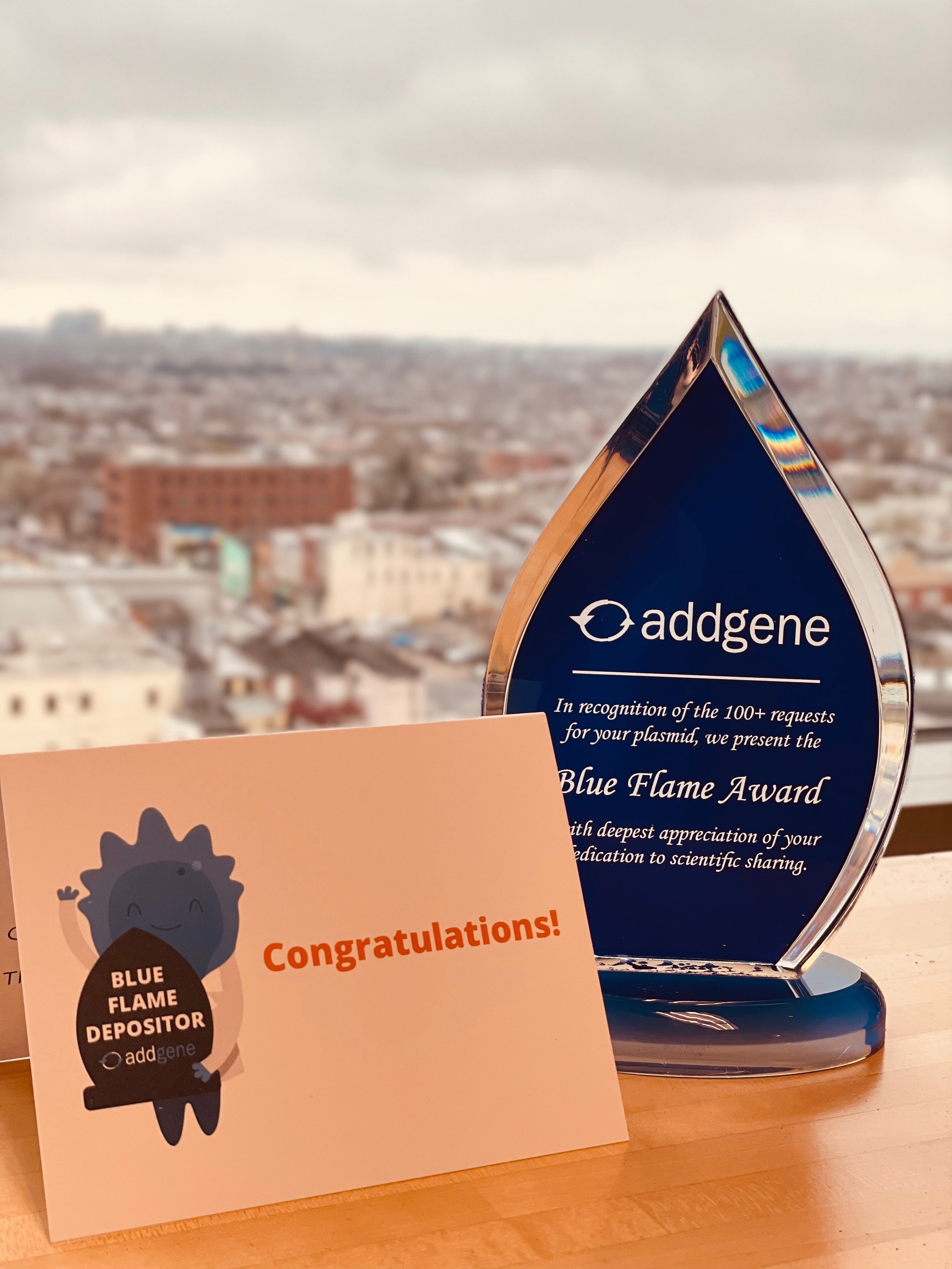
Apr 5: Our lab received the Blue Flame Award from Addgene in recognition of our reagent sharing efforts.
Feb 18: Our work demonstrating PAR as a potent inducer of condensation of a key disease protein implicated in neurodegenerative disorders, such as ALS, is out now @Molecular Cell
Dec 14: Our first publication on developing a new class of antivirals against COVID and other coronavirus threats (selected as ACS Editors’ Choice)
For more news, visit our archive.